Fleet & depot charging

Ready for the next shift.

Charging planned around your routes, your vehicles and the time they spend at the depot.

Plan your depot
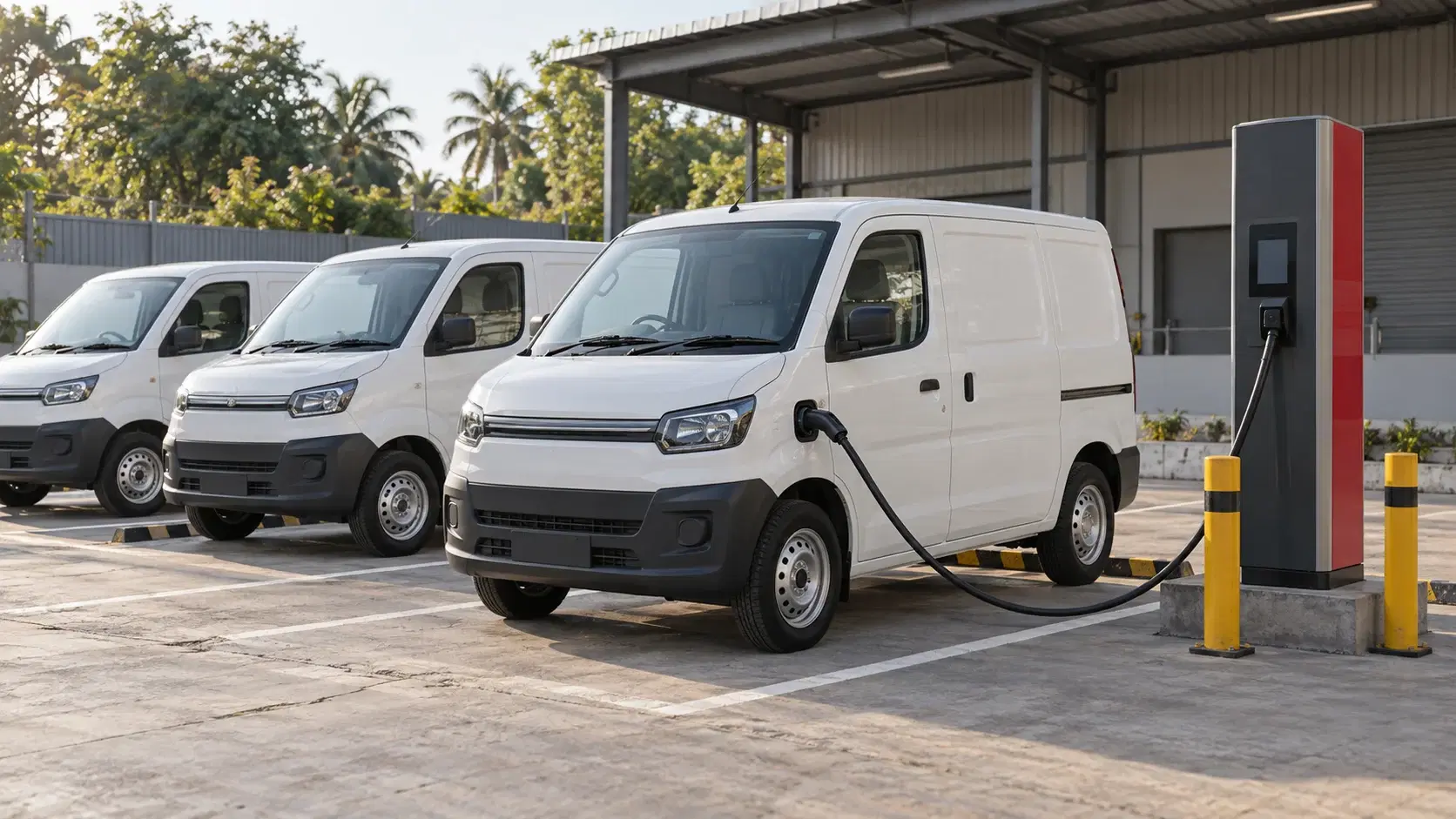
Illustrative electric delivery vans and charging equipment in an Indian fleet depot
Visualisation · Illustrative visualization · Not an EHUB installation
01

The vehicle

Connector, battery and daily distance

02

The schedule

Return time, dwell time and departure

03

The site

Power, bay layout and expansion

Built around your operation

Start with the next departure.

Map each vehicle’s daily distance, return time and charging window. Then size the charger mix and electrical capacity to meet that schedule, with a plan for delayed vehicles, charger faults and future fleet growth.

Designed for

A plan for every kind of fleet.

The right charging approach depends on who uses the site, how long they stay, the available electrical capacity and who will operate the system.

Fleet operators
Logistics teams
Institutions
Government fleets
Investors

How it works

From first vehicle to full depot.

01

Turn the duty cycle into a charging plan

Different routes and shifts create different energy requirements. Use vehicle data and parking windows to decide which vehicles can charge slowly and which need a shorter turnaround.

  • Daily energy requirement
  • Return and departure times
  • Vehicle and connector mix
  • Bay allocation
02

Give the operations team a clear view

Define how drivers access chargers and how managers review sessions, exceptions and energy use. Reporting and remote controls depend on the chosen chargers, connectivity and software integration.

  • Vehicle and driver access
  • Charging schedules
  • Session and energy reports
  • Fault response process

Fleet account billing

Charging schedules

Depot visibility

Energy analytics

Next step

Let’s talk about your site.

A few details are enough to begin. We can work through the technical questions together.

Let’s talk

Your project.
A conversation to start.

Tell the team your city, the kind of site you have in mind and what you want charging to make possible.

Project
Fleets
Based in
Hyderabad, India

Email opens your email app; calling opens your phone app. You choose when to send or call.

Clear answers

Fleets FAQ

What data is needed to plan a fleet depot?+

Provide vehicle models and numbers, daily distance or energy use, return and departure times, the parking layout and electricity connection details. Planned fleet growth is useful too.

Does every fleet need DC fast charging?+

No. Vehicles with longer overnight dwell times may be served by AC charging if their energy needs and onboard chargers allow it. Short turnaround windows may justify DC charging after a load and cost review.

Can charging be scheduled across the fleet?+

Scheduling can be included where the selected chargers and software support it. The design must account for departure priorities, vehicle readiness, site power limits and what happens when communications are interrupted.